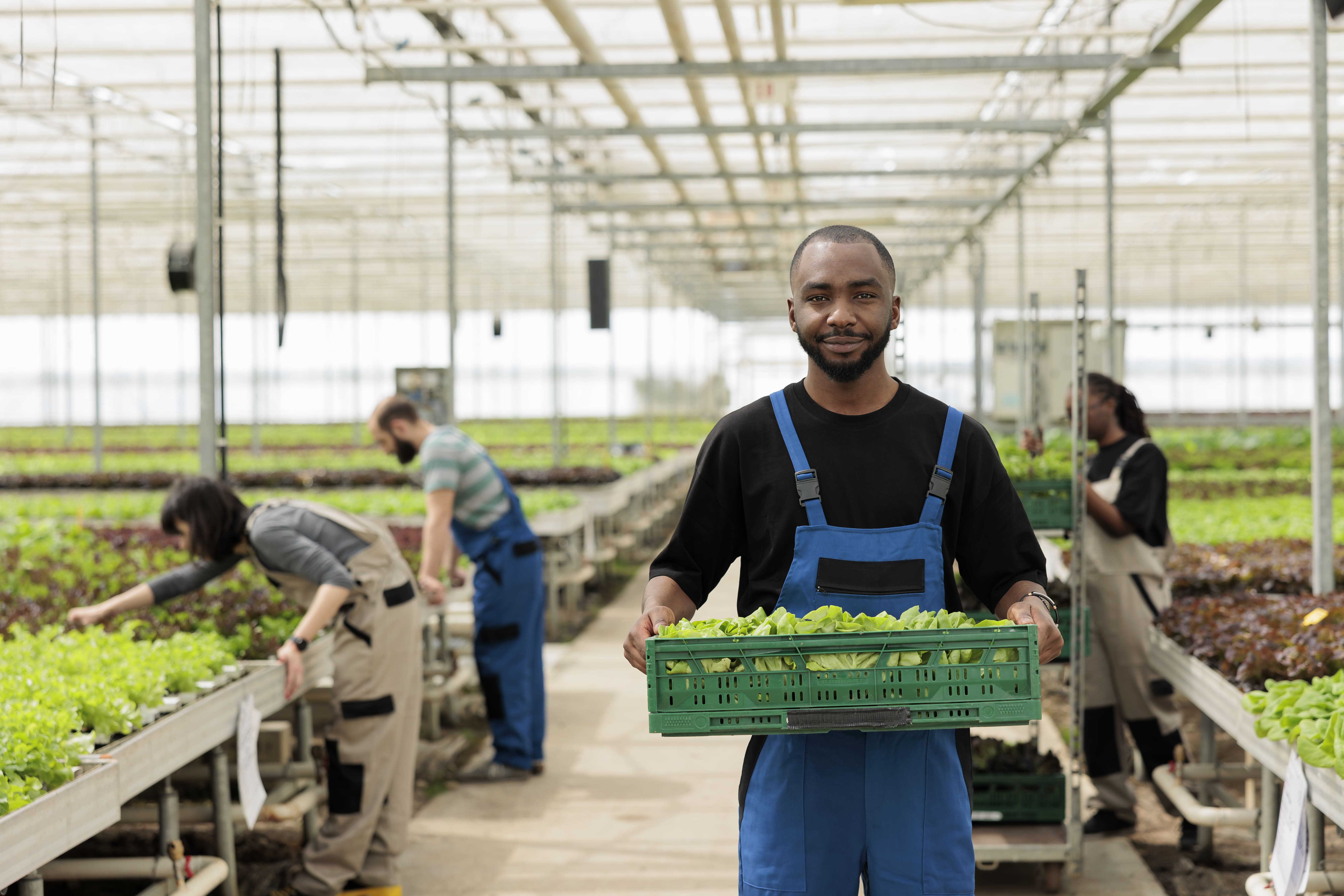
Export compliance · EUDR due diligence · Coffee, cocoa, avocado
Get export-ready before your buyer asks.
Export compliance is settled at origin or not at all. TruSource holds the record from the farm boundary to the container, runs the checks on every farm and every shipment, and assembles a due diligence statement you can defend. Built for importers and exporters alike, for EUDR today, on a ruleset that follows you into the next market.
Your first 20 shipments come with Starter features, free.
- EUDR 2023/1115
- FAO Whisp screening
- GeoJSON for the EU system
- Records held 5+ yrs
- 4M+
- Origin data points streamed and validated
- 40+
- Exporters interviewed to scope the problem
- 20–40 t
- Produce tracked daily at pilot
- Since 2024
- Operating at origin, in East Africa
Partners & programs
Who we build with







Who we work with
Built for exporters, the buyers they ship to, and the funders behind the outcome.
Origin data has one truth, but three different people need to trust it: the exporter who has to prove their sourcing, the buyer taking on liability, and the investors funding market access for African producers.
Exporters & cooperatives
Prove your sourcing before a buyer ever asks. Your own workspace shows which farms and shipments fail a check, and you decide which consignments to share and for how long. Your first 20 shipments come with Starter features, free.
Importers & operators
You place goods on a regulated market and carry the liability for every farm behind the goods. Examine each consignment, ask for what is missing, and file a due diligence statement whose evidence is frozen the moment you file it.
Impact investors & grant partners
Market-access infrastructure for African agricultural exports, with outcomes mapped to UN SDGs 2, 3, 8, 12, 13, and 15 — traceable, auditable, and reported against.
You didn't collect it.
Plot data arrives from cooperatives, unions, and LBCs in Excel, GeoJSON, PDFs, and national-system exports.
You can't check it.
Self-declared polygons hide invalid geometry, post-2020 forest loss, and plots recycled across exporters.
You're liable for it.
From 30 December 2026 the operator placing goods on the EU market answers for every plot — fines up to 4% of EU turnover. Every market that regulates origin lands on the same principle.
How EUDR due diligence works
EUDR due diligence, from farm boundary to filed statement.
- Step 1
Record the origin.
Farms with a boundary — or a point where the regulation allows one — then the lots that came off them and the shipment that carries those lots to one buyer.
- Step 2
Run the checks.
Geolocation, area, overlaps, documents, and a deforestation screen through FAO Whisp against the 31 December 2020 cutoff. Each result passes, fails, or comes back not conclusive.
- Step 3
Share and declare.
The exporter shares a consignment; the buyer examines it, asks for what is missing, and assembles the due diligence statement from what the record holds.
- Step 4
Freeze the evidence.
Filing records the exact version of every boundary, document, and check behind the statement. Suppliers cannot delete it, and a later change never rewrites what you filed.
The record
Evidence that survives the change it describes.
Origin data moves after you rely on it — a boundary is redrawn, a certificate expires, a farm is re-measured. TruSource keeps every version, so a lot carries the boundary as it was on the day it was recorded, and a filed statement holds the exact evidence it was filed against. When something changes afterwards, you are told what changed rather than quietly given a different answer.
Built to travel
EUDR is the first ruleset, not the only one.
Every market that regulates origin converges on the same two questions: where did this come from, and can you prove you checked? The answers differ — the cutoff date, the authority the operator files to, the evidence they must keep. The record does not.
- Cutoff dates, required documents, and statement formats are configuration, not code
- The record chain and the frozen evidence behind a statement are regime-independent — they keep their value when the rules move
- A new market is onboarded as a ruleset, not a rebuild
Coverage
Coffee, cocoa, and avocado today.
Built for the EUDR commodity list and its derivatives. We name what runs in production rather than list a roadmap and let you find out which parts were aspirational.
- Farms, lots, shipments, and documents — the whole chain from the land to the container
- Every farm checked for geolocation, area, overlaps, documents, and deforestation against the cutoff
- Export documents generated in the formats Kenyan exporters need — including invoices in the KRA eTIMS format, which you submit under your own name
- EUDR is the regime we build to today; the ruleset is configuration, not a rebuild
The point
African produce meets the standard. We supply the proof.
European buyers should be able to trust what they import. TruSource turns unverifiable supplier data into an audit-ready record — so the produce clears on its merits, not on the benefit of the doubt.
FAQ
Common questions from exporters and operators
Exporting to the EU?
If your buyer runs on TruSource, you get a workspace of your own: record your farms, lots, and shipments, see exactly which checks fail before a buyer ever asks, and share a consignment when you choose to. Want to run TruSource as your own compliance system rather than only as a supplier? Engage us as a client.
Your first 20 shipments come with Starter features, free.
Bring a real shipment. See what the checks return.
Walk one of your own consignments through the platform with us — including the parts that come back missing.
Your first 20 shipments come with Starter features, free.